Table Of Content
The living room can look beautifully furnished and still feel uncomfortable because of one simple problem: the windows are not working with the space.
Maybe harsh afternoon sunlight falls directly on the sofa. Perhaps the TV screen becomes difficult to see because of glare, or your living room faces another building, making privacy a concern every evening. Then there is the question of style. You want enough daylight to keep the room welcoming, but you do not want bulky window coverings taking over the interior.
This is where choosing the right blinds makes a real difference. Research on cellular shades, for example, has found that certain shading systems can reduce daily heating energy use by 17% to 36% compared with windows without shades, showing that window coverings can play a practical role beyond decoration.
So, what blinds are best for living room spaces? The answer depends on your windows, sunlight, privacy requirements, interior style, and how you actually use the room.
Let us look at the options in detail.
Your living room is usually one of the busiest spaces in the home. It may be where you watch television, entertain guests, read, relax, or spend time with family. That means your blinds need to perform several jobs at once.
Every living room has different lighting, privacy, and style requirements. Here are seven popular blind options and the specific benefits each one can bring to your space.
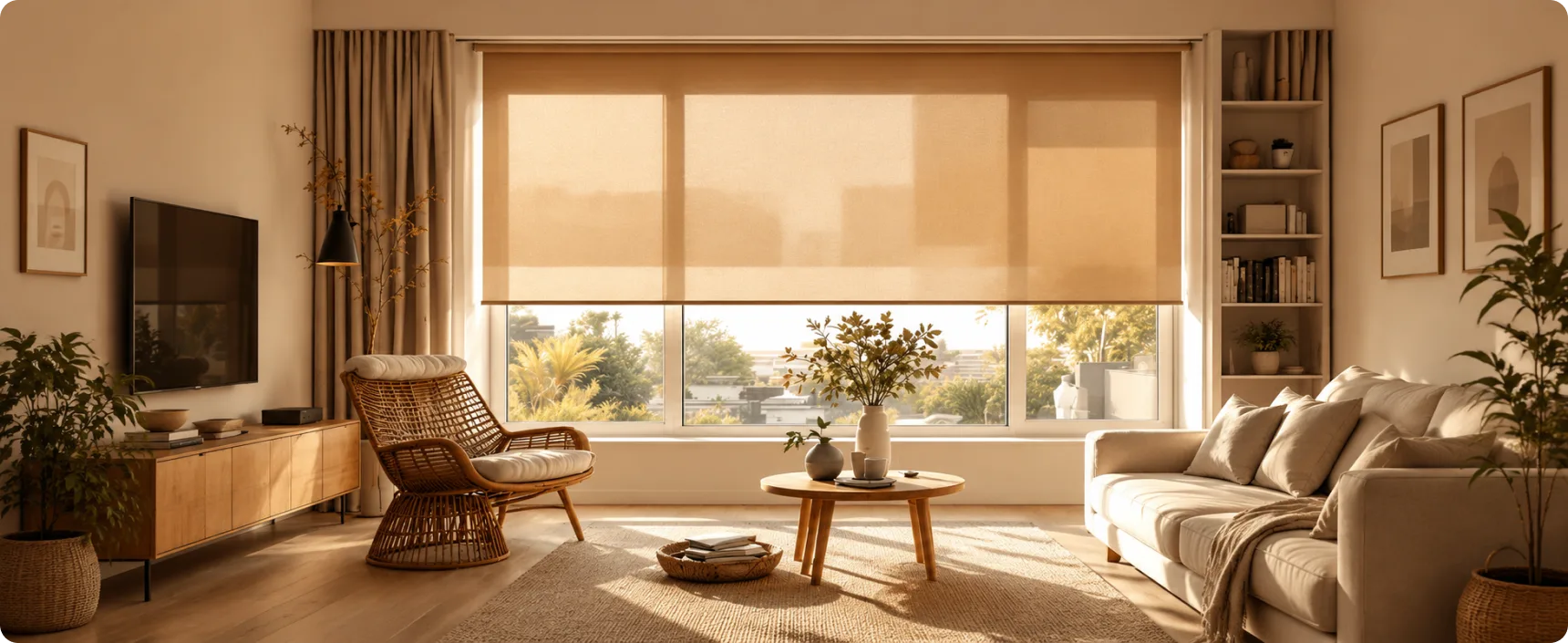
Roller blinds are among the most versatile choices for living rooms. They use a single fabric panel that rolls neatly around a tube when opened. When closed, the fabric provides a clean and uncluttered appearance.
They work particularly well in:
You can choose light-filtering fabrics when you want soft daylight or more opaque fabrics when privacy and glare control are priorities.
For example, imagine a living room with a large west-facing window. Instead of closing heavy curtains every afternoon, a suitable roller blind can filter the strongest sunlight while keeping the room bright.
Zebra blinds are a popular option for homeowners who want more control over changing daylight. They consist of alternating translucent and opaque fabric bands. By adjusting their position, you can change the amount of light entering the room.
This flexibility makes zebra blinds especially useful for living rooms that are used throughout the day. They also have a contemporary appearance, making them suitable for modern interiors.
Not every living room needs a sharp, minimalist appearance. If your interior includes upholstered furniture, wooden elements, cushions and warm textures, Roman blinds can introduce a softer look.
Roman blinds fold into neat horizontal sections when raised. Their fabric-based appearance gives them more decorative character than many hard-blind options. They can work beautifully in:
Think of a living room with a beige sofa, wooden coffee table, and textured rug. A neutral Roman blind can connect these elements without making the window look too stark.
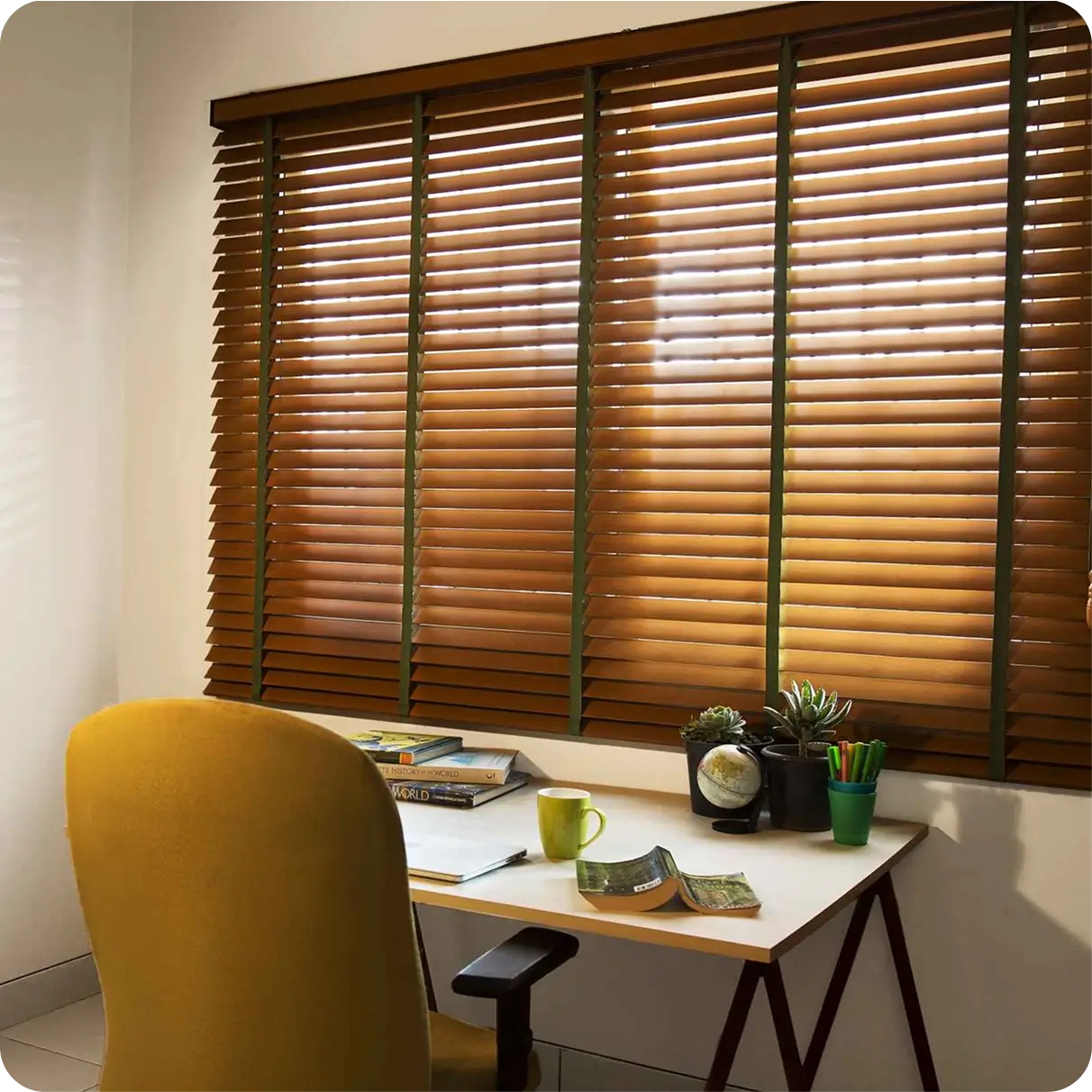
Venetian blinds use horizontal slats that can be tilted to control light and privacy. This is particularly useful when you want daylight but do not want direct sunlight entering at a particular angle.
For example, if your living room receives strong sunlight from the side in the late afternoon, you can tilt the slats rather than completely closing the blind.
Wooden and faux-wood options can also add visual warmth. They suit interiors featuring:

Large glass doors require a different approach. Vertical blinds are designed with vertical vanes that move along a track. They can be practical for wide windows, patio doors, and large glass openings.
They are particularly useful when the window or door is frequently used. Consider a living room opening onto a balcony. A horizontal blind may become inconvenient when the door is opened repeatedly. A vertical system can move to one side, keeping the opening accessible.
For floor-to-ceiling glass, vertical or panel-based solutions can therefore be more practical than standard horizontal blinds.
If temperature control is a major concern, cellular blinds deserve attention and their honeycomb-like structure creates air pockets that can help improve the insulating performance of the window covering.
This can be useful in rooms with large areas of glass, where sunlight and heat gain can affect indoor comfort.
A 2022 study examining cellular shades found that experimental testing produced 17%–36% daily heating energy savings compared with windows without shades. Results naturally vary according to climate, window construction, shade design, and usage.
The important point is that blinds can contribute to comfort and energy performance, not just aesthetics.
What if your living room has tall windows that are difficult to reach? Motorized blinds can solve that problem. Instead of manually adjusting every blind, you can operate them using a remote, wall control or compatible smart-home system. They are especially useful for:
You can also create routines. For example, blinds can be opened in the morning and adjusted later when direct sunlight becomes stronger.
Choosing by appearance alone is one of the most common mistakes, and before selecting a product, ask yourself a few practical questions.
A north-facing and west-facing window can behave very differently. A west-facing living room may receive intense afternoon sunlight. In that situation, glare and heat control become more important.
A room with softer indirect daylight may require a lighter treatment. Understanding the direction of sunlight helps you select the right fabric and opacity.
Look outside your window.
If privacy is important, choose a blind that provides suitable coverage without unnecessarily making the room dark.
This is an easy detail to overlook. If your television faces a bright window, glare can become irritating. In such cases, adjustable blinds or a suitable light-filtering/room-darkening solution can make movie nights considerably more comfortable.
Large windows require careful consideration of the blind’s width, operating mechanism, and material. For balcony doors or floor-to-ceiling windows, look beyond standard roller blinds and consider vertical or other large-opening solutions.
Your blinds should look intentional.
This is another common question, and for most living rooms, complete blackout is not always necessary. Bedrooms often need darkness for sleeping. Living rooms usually benefit from some natural daylight. Light-filtering blinds are therefore a practical choice when you want:
Blackout or room-darkening fabrics can make sense when the living room doubles as a home theater or receives extremely strong sunlight.
The best solution can also be a combination. For example, a homeowner may choose a light-filtering blind for everyday use and add curtains for stronger evening privacy and occasional darkness.

Why choose one when the room can benefit from both? Layering blinds with curtains can provide greater flexibility.
During the day, the blinds can manage glare and privacy while the curtains remain open, and in the evening, the curtains can add privacy and softness. This approach is particularly attractive in larger living rooms where the windows are a major design feature.
It also gives you two visual layers: a functional layer close to the glass and a decorative layer around it.
Choosing blinds for your living room is not just about finding a style that looks attractive. The right blinds should also suit your windows, lighting conditions, privacy needs, and everyday lifestyle. Here are some common mistakes worth avoiding.
A color may look perfect in a sample but still fail to provide the light or privacy control you need. Consider the blind’s functionality first, then choose a color and finish that complements your interiors.
A blind that works well for a small window may not be suitable for a wide glass door or floor-to-ceiling window. Measure the window carefully and consider how easily the blind can be opened, closed, and operated.
Blackout blinds are useful when you need maximum light control, but they may not be necessary for every living room. If you prefer a bright and naturally lit space, light-filtering blinds can soften sunlight while keeping the room welcoming.
Living room blinds are exposed to dust, sunlight, and everyday use. Choosing a material that is easy to clean can save time and keep your windows looking fresh. This is especially important for homes near busy roads or frequently opened windows.
The best option depends on the problem you are trying to solve.
Ultimately, what blinds are best for living room interiors comes down to balancing sunlight, privacy, comfort, window size, and design.
Do not treat blinds as an afterthought. They can influence how bright the room feels in the morning, how comfortable it is during a sunny afternoon, and how private it feels when the lights come on at night.
The right blinds should do more than cover a window. They should make your living room more comfortable, practical, and visually complete.
At Ferbo furnish, you can explore window blind solutions designed around different interior styles, light requirements, and everyday needs. Whether you are looking for a clean roller blindor a contemporary zebra design, elegant Roman blinds, or a convenient motorized option, choosing the right solution starts with understanding your space.
Look at your windows, observe how sunlight changes throughout the day, and consider how you use your living room. Then choose a blind that works with those realities.
Ready to give your living room a smarter window solution? Get in touch with us today and find the right blinds for your space.
Related Product
We would love to speak with you. Feel free to reach out using the below details.
Other related blogs
Roller, zebra, Roman, Venetian, vertical, and cellular blinds can all work well. The best choice depends on light control, privacy, window size, and interior style.
Yes, depending on the window dimensions and blind system. For very wide windows or large glass doors, vertical or specialized large-opening solutions may be more practical.
Yes. Blinds can filter or block incoming sunlight and help reduce glare, particularly on television and computer screens. The result depends on the blind’s fabric, opacity, fit and positioning.
WhatsApp us