Table Of Content
How to clean blinds depends on their material, design, and level of dirt. Regular cleaning helps remove dust, grease, pet hair, stains, and other buildup while maintaining the appearance and functionality of your window coverings. Wooden, roller, zebra, vertical, Roman, and fabric blinds may each require different cleaning methods.
In this guide, you’ll learn how to clean blinds properly, including the right tools to use, step-by-step cleaning methods for different blind types, how to remove stubborn stains, and common cleaning mistakes to avoid. Using the correct technique can help protect your blinds and keep them looking fresh for longer.
The right tools help you clean blinds effectively without causing scratches, stains, or material damage. Keep these essentials ready before you begin:
Avoid bleach, harsh chemicals, and abrasive scrubbers, as they can damage finishes, fade colours, or weaken fabrics.
Close the blinds fully before cleaning. This exposes the entire surface, making it easier to remove dust evenly from each slat or fabric panel.
Use a microfiber cloth, feather duster, or vacuum cleaner with a soft brush attachment to remove dust from top to bottom. Clean both sides of the blinds to prevent dirt from settling back onto the surface.
For fingerprints, grease, or small stains, use a damp microfiber cloth with mild dish soap. Wipe gently and avoid using excess water, as moisture can damage certain materials like wood and fabric.
Remove any leftover moisture with a dry cloth and allow the blinds to air dry completely. Proper drying helps prevent water marks, mould, and material damage.
Your blinds need the right cleaning method based on their material and design. A technique that works well for aluminium blinds may not be suitable for wooden or fabric blinds. Before you start cleaning, identify the type of blinds you have and choose a method that removes dirt without affecting their finish or structure.
Here is how you can clean different types of window blinds safely and effectively.
If you have Venetian blinds, regular dusting can help prevent dirt from settling between the slats. Use a microfiber cloth, feather duster, or vacuum cleaner with a soft brush attachment to remove surface dust.
For grease marks or stubborn stains, especially in kitchen areas, gently wipe each slat with a damp cloth and mild soapy water. Once cleaned, dry the slats immediately to avoid water spots.
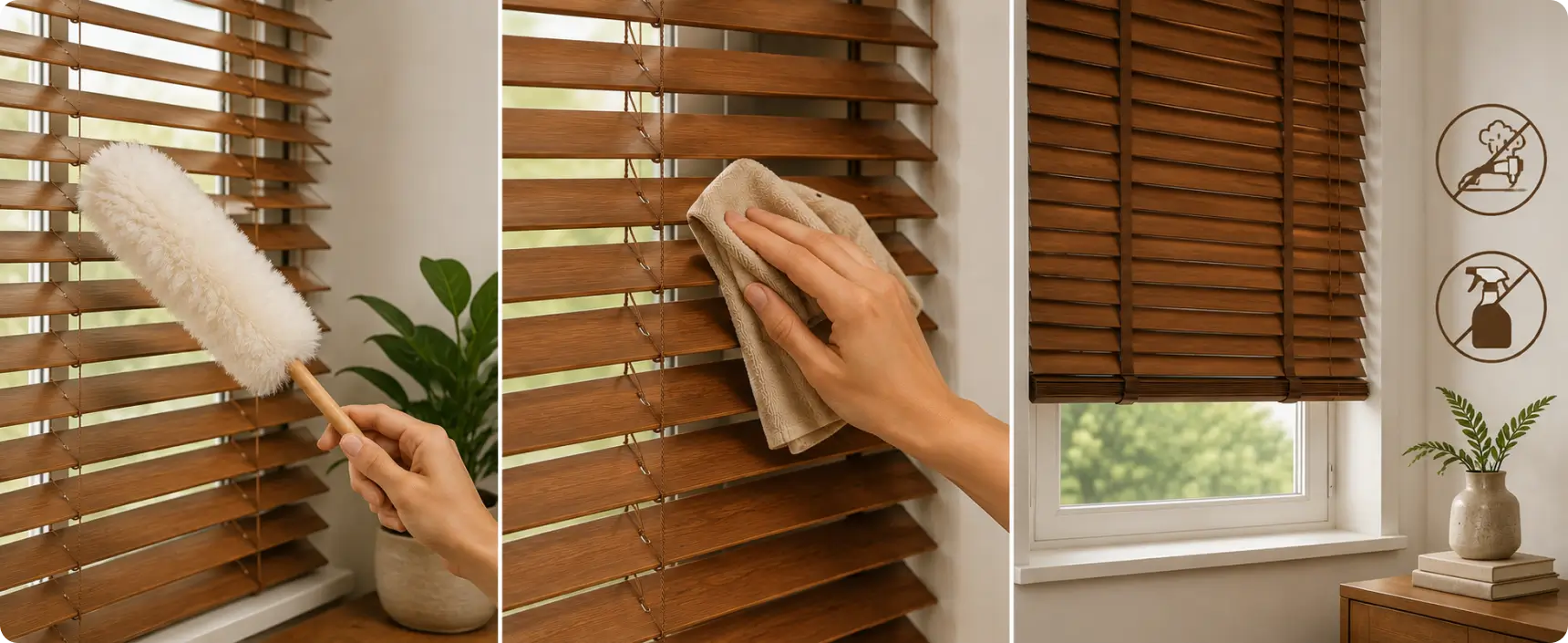
Wooden blinds add a natural, elegant feel to your space, but they need extra care to maintain their finish. Start by dusting them regularly with a dry microfiber cloth or feather duster.
When your blinds need deeper cleaning, use a wood-safe cleaner applied to a soft cloth. Avoid soaking the slats or spraying water directly on them, as moisture can cause the wood to warp, crack, or lose its protective finish. It’s also best to avoid steam cleaners and harsh chemicals.
If you have faux wood blinds, cleaning them is usually easier because they’re more resistant to moisture. This makes them a practical choice for areas where blinds may be exposed to humidity or spills.
You can clean them using a damp microfiber cloth and mild dish soap. For areas with stubborn dirt, gently wipe the surface without scrubbing too hard. Once you finish cleaning, dry the slats with a clean towel to prevent marks.
Roller blinds collect dust across their fabric surface, so regular vacuuming can help keep them looking fresh. Use a vacuum cleaner with a soft upholstery attachment and gently clean the fabric.
If you notice stains, avoid rubbing the area aggressively. Instead, dab the mark with a clean cloth and a fabric-safe cleaning solution. Keep the blind fully extended while drying to prevent moisture from settling into the fabric.

Zebra blinds have a unique layered design with alternating sheer and opaque fabric panels. Because of this, they need gentle cleaning to maintain their appearance.
Start by removing dust with a microfiber cloth or vacuum cleaner with an upholstery attachment. For small marks, lightly wipe the area using a damp cloth and mild soap. Avoid soaking the fabric or using harsh cleaners. Allow your blinds to dry completely before rolling them back up.
Roman blinds are made from fabric, so gentle cleaning is the safest approach. Use a vacuum cleaner with a soft brush attachment to remove dust without affecting the fabric.
For small stains, spot clean the area using a mild detergent solution and a soft cloth. If your Roman blinds have removable fabric, check the manufacturer’s instructions before washing. Always make sure the fabric is fully dry before reinstalling it.
Vertical blinds are a popular choice for large windows because they are easy to operate and maintain. To clean yours, use a microfiber cloth or vacuum attachment to remove dust from each vane.
If the vanes are removable and washable, follow the care instructions provided by the manufacturer. Allow them to dry completely before putting them back to avoid moisture-related issues.
If you have cellular blinds, you will need to be slightly more careful because their honeycomb structure can trap dust inside the small pockets.
Use a vacuum cleaner with a soft brush attachment to remove surface dust. For dust trapped inside the cells, compressed air can help loosen particles without damaging the structure.
Avoid pressing, folding, or crushing the cells while cleaning, as this can affect their shape and reduce their insulation benefits.
To clean window blinds, first remove loose dust using a microfiber cloth or a vacuum with a soft brush attachment, working from top to bottom. For stains or fingerprints, use a slightly damp cloth only if the blind material allows moisture, as wooden and fabric blinds can be damaged by excess water. Avoid harsh cleaners, test any cleaning solution on a hidden area first, and let the blinds dry completely before closing or rolling them up.
Dust is usually easy to remove, but certain stains need extra attention. Grease, fingerprints, food marks, and moisture stains can build up over time, especially in kitchens and high-traffic areas. The key is to treat stains gently and avoid using cleaning methods that may damage the blind material.
Here are some common stains and the safest ways to handle them:
| Type of Stain | Cleaning Method |
|---|---|
| Dust and everyday dirt | Use a microfiber cloth or vacuum with a soft brush attachment |
| Fingerprints | Wipe gently with a damp microfiber cloth |
| Grease marks | Use mild dish soap mixed with warm water |
| Pet hair | Remove using a vacuum brush attachment or lint roller |
| Food stains | Dab with a mild detergent solution |
| Mould spots | Use a suitable vinegar solution only on compatible materials |
Before applying any cleaning solution, test it on a small hidden area first. This helps you check whether the product affects the colour, texture, or finish of your blinds.

Using the wrong cleaning methods can damage your blinds and reduce their lifespan. Keep these common mistakes in mind when cleaning your window coverings:
A simple and gentle cleaning routine helps you maintain your blinds without causing unnecessary damage.
Regular cleaning helps your blinds stay fresh, functional, and well-maintained for longer. By using the right care methods for each material, you can prevent damage and make maintenance easier. If you are looking for stylish blinds that are simple to maintain, Ferbo Furnish offers quality window solutions designed to complement modern homes and everyday living.
Related Product
We would love to speak with you. Feel free to reach out using the below details.
Other related blogs
The easiest way to clean blinds without removing them is to use a microfiber cloth or vacuum with a soft brush attachment. Start from the top and work downward to prevent dust from settling on already-cleaned areas. For stains, gently spot clean with mild soap and water.
Yes, a vacuum cleaner can be used to remove dust from many types of blinds. Use a soft brush attachment and low suction to avoid damaging delicate fabric or bending the slats. Check the manufacturer’s instructions before vacuuming.
No, not all types of blinds can be cleaned with water. Roller blinds, zebra blinds, wooden blinds, cellular blinds, and Roman blinds require different cleaning methods depending on their material. Wooden blinds should generally be cleaned with a dry or slightly damp cloth, while fabric blinds need gentle care. Always check the manufacturer’s cleaning instructions before using water or cleaning solutions.
The best cleaning solution for real wood blinds is a mixture of a capful of Murphy Oil Soap mixed into a gallon of warm water, or simply a damp microfiber cloth with a few drops of mild dish soap, ensuring the wood is never soaked
WhatsApp us